Monday, 14 August 2017

Villages, coffee and mangroves

Off to work!
Mangroves occur in bays dotted all along the west coast of Madagascar, protecting thousands of hectares of shoreline that border the Mozambique Channel. Last month, Lalao and I conducted a needs assessment at another site in and around the town of Belo sur Mer, located about midway along the long edge of Madagascar. There are about 12 communities in the area; Blue Ventures is working with these to promote sustainable fisheries, develop alternative livelihoods and manage the mangrove forests. We visited 6 of these communities, and met with the village associations as the first step in developing our Blue Forests planning for the site.
The mangroves are extensive, largely intact and beautiful. 


Coffee and menakely for breakfast. Menakely (called boko boko in other places) is a lot like a donut, but not as sweet.
Accommodation in Belo sur Mer


Left: Village meetings have to wait until the fishing day is done. And sometimes we get participation from the local chickens. This was our first meeting of the field tour, in Antananamibo.


Below: Eloi, the boat captain spotting a safe route for the pirogue in shallow water.
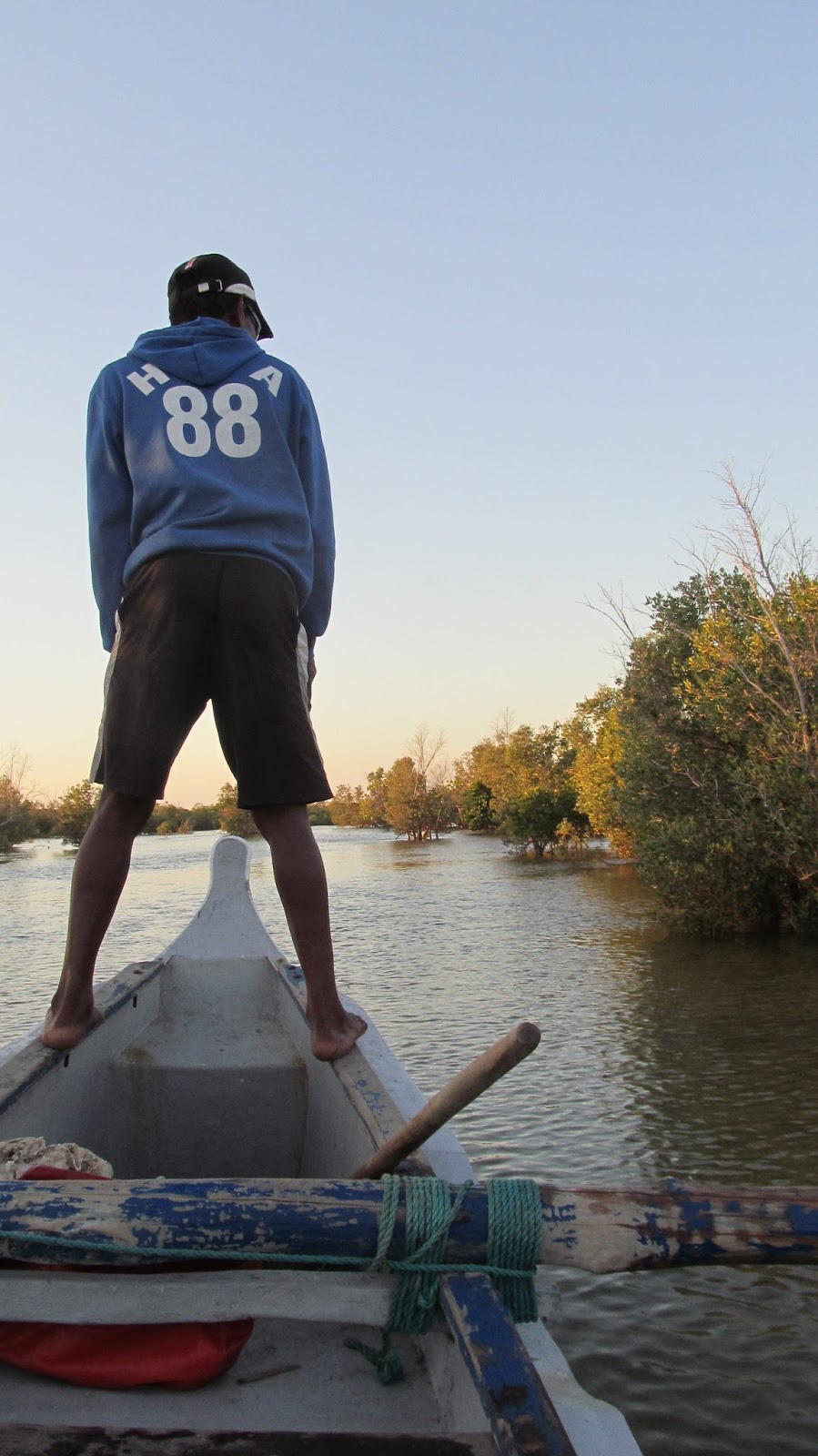


Below: Coming back into Belo sur Mer, temporary shelters of migratory fishermen on a sandspit are backlit.


Left: Fran, a Blue Ventures aquaculture technician, checking out the drying seaweed. Local residents can make a decent living from seaweed farming. This is in the village of Menaky.


Typical, square-sailed pirogue used by fishermen all along the coast


Women use a paste made from pounded bark as a sunscreen and beauty product.

Breakfast at the local cafe


 I had the feeling someone was sneaking up on me....
.....and then I was swarmed.


Meeting with the village association in Belalanda - the community members have a high level of interest in actively managing mangroves, well aware that the health of fisheries is heavily dependent on intact coastal mangrove forests.


At the end of this day we jumped into small pirogues to ferry out to our motorized boat.


Right: Lalanda, a dune-stabilizing plant with long runners.


Left: Men use handtools to carve wooden pirogues.


Two uses of mangrove wood.


Right: A woman is repairing her fence made of mangrove poles.


Above: Bags of charcoal, ready for transport and sale.


Another local coffee shop; the owner on the left is making menakely (basically fried cassava doughballs) on the right two of her children are pounding cassava into flour.


Below: The mangrove forest outside of Lovobe; some of the damage is from harvesting, but some of the mortality may have resulted from the effects of a cyclone that occurred 5 years ago, which may have changed tide levels along this part of the coast.


Left: The cyclone also destroyed the school in one village; the teacher holds classes outdoors.


Right: A convenience store sells packaged goods.


Below: Village women in Lovobe, the last stop on our field tour.

The man on the right is coaching the boy in the pirogue - a boating lesson in relatively light waves.

My excellent co-worker Lalao - needless to say I would be completely lost without her.


Sweet work!

Wednesday, 29 March 2017

When Carbon Sequestration = Village Schools

Mangroves = carbon = schools
By registering the Bay of Assassins mangrove forests as a Plan Vivo project, Blue Ventures, as the project manager, will be able to channel money to communities through the sale of certificates for carbon credits on the open market. The certifier - in this case Plan Vivo, although there are other carbon standards - ensures that these certificates are backed up verifiable trees just standing around in the forest, sequestering carbon. And if they’re mangrove forests, the trees, soil and roots together add up to an ecosystem that can hold more carbon than many other forest types.
A few potential beneficiaries of the project

However, the preparation and planning that goes into validation of the project - that is, ensuring that carbon credits sold as certificates can be traced back to their origin from sustainably managed forests, supported by biomass volume calculations - has an enormous amount of work going on behind the scenes.

The primary consideration is that the people in the communities are full participants in, and leaders of, the process. The Blue Forests team working in the area; Lalao, our project coordinator, Cicelin, Dolce and Aina, have visited and re-visited each of ten villages; to first conduct information sessions to assess interest and commitment on the part of the communities, then to systematically guide them through the process. I’ve joined the project close to the end of the many consultations, as we expect to be able to finish this stage by July.

Village consultation
The villagers have discussed and agreed upon zonation of protected areas (no harvest of trees at all), sustainable use areas and planned reforestation areas. (The goal is to plant 10 hectares of mangrove each year until the degraded forest is completely covered in mangrove again.) To ensure that no harvest occurs from protected areas and that cut quotas are respected in the sustainable use areas, communities have also agreed on local rules (Dina) and as a result, have also planned a system to enforce the rules. One of the major issues throwing a wrench into control of mangrove forests by communities is that outsiders often come into the area, cut trees and transport them away for sale of the wood or to make charcoal. Everyone has agreed that monthly or bi-monthly patrols are necessary - which means that locals must be recruited and trained to monitor the forests and report infractions to the village and district associations.

Dolce, leading the consultation
in the Ankitambagna school, on the list to be replaced

Discussions have been had around what to do with the money earned through sale of carbon credits, with most villagers approving the construction of new schools, or meeting halls, or markets. Actual earnings, spread out over 20 years of the project, probably won’t be enough to completely fund the infrastructure, but will buy materials, and it is expected that communities will provide the labour for construction. However, some villages will have to wait for their share, and another consultation will be held to agree on the priority sites and to create a schedule for each villages’ needs.

One of our coastal villages


The latest meetings were held over the last two weeks to discuss benefit sharing and to explain division of the funds that will be earned. A percentage each year is set aside for monitoring and protection of the forest, some portion will be remitted to the larger area association and national government and at least 50%, possibly more, will be available for community projects. Generally, interest in these consultations varies between villages, but the presidents of the communities attended a workshop before this round and they all clearly explain the issues that are being brought before the residents for consideration, and consensus is reached through open, and sometimes vigorous, discussion.

In the next 3 months, we have at least 3 more village tours on the calendar; for benefit sharing with the discussion on infrastructure priorities, consultations to design a grievance mechanism and final validation of the whole project by each community. The process requires continuous, dedicated effort on behalf of the Blue Forests team in the Southwest and so far, they’re advancing the ball steadily and surely - we’ll get there.  


The best part for me about this round of consultations? The commute - a sweet hour in a sailing pirogue to get to Lomboara on the last day before wrapping up the tour. 

Aina, one of the Blue Forests team members, 
at home on the pirogue

Obligatory (for me) baobab picture (expect more)

Tuesday, 7 March 2017

Blue Ventures / Blue Forests

Baobab in the southwest forest
Note: For those of you who read my blog (because I shamelessly email the link, maybe?), I know, it's been a while (15 months). Update: I spent 7 months of 2016 in Bogor, Indonesia but wasn't inspired to write a lot - I worked as deputy director for a landscape management project, about 3 steps of the ladder away from the actual landscape (i.e. in an air-conditioned at a desk behind a computer - highly reminiscent of my last Canadian job).
Casting around for the next job, I made the conscious decision to choose one that offered a technical field work aspect and have been incredibly lucky to land a position with Blue Ventures in Madagascar as their Blue Forests programme lead, advancing work to ensure sustainability in coastal mangroves. So here's how things are going.... 
Dry forest in southwest

Hotel in Befandefa, a village in Baie des Assassins
Village in southwest - note the fence; constructed from mangrove species

Village outreach, consulting on mangrove reforestation areas
Another source of income - seaweed cultivation

Village of Andavadoaka


So far, the first two months of my new job has involved a lot of traveling - Antananarivo, Toliara, Ambanja, Andavadoaka and surrounding villages, with possibly Mahajamba and Belo sur Mer lined up in the next month. All with the aim of familiarising myself with the several sites at which Blue Ventures operates. BV has been in Madagascar for over 10 years, primarily focused on improving fisheries sustainability in coastal communities. But, as with any environmental issue, it’s all connected, and for the last four years additional resources have been targeted towards management of bordering mangrove forests which have been depleted for building supplies and charcoal production. Mangroves, for my non-forestry readers, are multi-functional ecosystems, fringing ocean and riverine systems in the tropics and sub-tropics. They provide nurseries for small fish, crabs and shrimp, and protect coasts from wave-action erosion and more severe events like cyclones. There are 8 species of trees found in Malagasy mangrove forests; comparatively few compared to Indonesia, with about 35 different species; all fascinating plants which are able to grow with their roots in salty water. 

Shoreline in Andavadoaka, village where BV has an office
Tree nursery in southwest, Cordylla madagascarensis seedlings
Outplanted seedling, southwest


The Blue Forests program is centered around communities close to the coast, primarily dependent on fishing for their livelihoods, which either have tenure over the mangroves or have a path to tenure, and depend on them to provide building materials for houses, fences and boats. Tenure is key, because it allows communities to continue sustainable harvest from mangroves; in an attempt to stop people from outside the area cutting trees in the mangrove forests the Malagasy government has made harvesting mangrove trees illegal. 


Our role is to facilitate communities to build management plans that include provisions to set aside protected zones and areas for sustainable harvesting, to monitor natural regeneration and to hold planting events to reforest the most seriously degraded areas.  And, to relieve demand for wood, we’re also helping to establish alternative wood plantations outside the mangrove zone, planting species that can be used for charcoal production; another environmental issue that demands a broader solution. Most Malagasy use charcoal to cook, other forms of energy being unavailable, unreliable or too expensive for the average family. If there were significant investment in affordable green energy sources, the threat to mangroves would decrease accordingly. 

Tree nursery in northwest, Acacia seedlings
However, charcoal production is also an important source of income for many villagers, who are living close to the poverty line, many earning less than $2 USD a day.
Heading out to plant seedlings
Options? Northwest Madagascar is humid, warm and leafy, which offers the potential to grow fruit crops, cinnamon, and other plants to replace cash earned by charcoal, as well as to develop beekeeping, producing
 mangrove honey. In the extremely dry southwest, options are more limited, but BV is supporting a trial beekeeping operation and alternative fuel wood plantations, expanding the paths to increased income for families whose primary source of food and money is fishing.


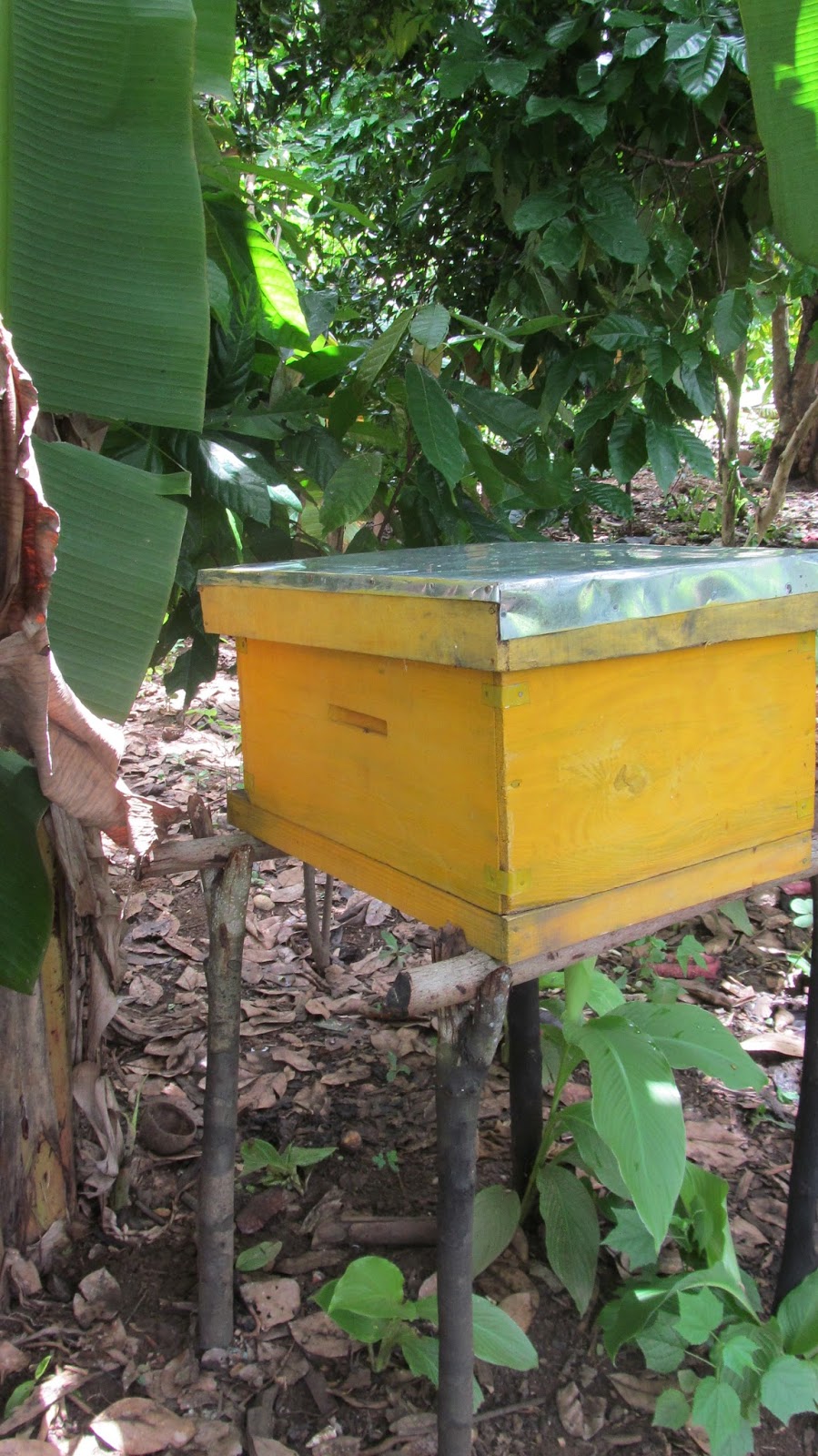
Beehive
Village consultation for health programme


Along the trail to a village in the northwest


My brain is swimming with all sorts of new information after these first 2 months - I’m hoping to go back to my base in Toliara and process a lot of this before sorting out how I can be effective in the job. Not to mention several other items on the to-do list; improving my French, picking up more Malagasy, finding a place to live and figuring out how to shop the markets. If learning keeps you young, I’m quite the baby now.


Weekend trip to Nosy Be with Tim, Danny (in front), Nick (behind Danny) & Kate
More baobab (expect lots of these in photos - I love them!)

Sunday, 20 December 2015

That was a fast 3 months!


Fruit sellers in Fianarantsoa market
Nicolas standing next to a
flowering succulent plant
Working in another country is not as exciting as it may sound...it really is just working with different scenery outside the office window. Sure it’s great scenery, but my eyes tend to be glued to computer screens doing fascinating things like monitoring project budgets, checking researchers’ comings and goings or writing procedures and reports. With the occasional break to interview for new staff members.

Backyard pet


Although, there were different interruptions to most days, and an astonishing variety of these. Perhaps a meeting with the national park officials to talk about park security issues. Or with the health NGO to bash out a collaboration agreement. A morning off to tour a visitor around the park and see a few more lemurs. Welcoming Finnish bat researchers at the start of their 3-week stay. Watching an American film crew get some shots of the local market with a drone. Yeah, I guess it can be a bit exciting at times. Certainly different due to the wide variety of activities and people that are based at Centre ValBio with it’s multiple functions of research, education at the graduate, undergraduate and local school level, health provision to remote villages, long-term biodiversity sampling, encouragement of local artisans and musicians etc. etc.

Meat kiosk in Fianarantsoa

But...I decided not to continue in the job and won’t be going back in January. I can certainly do admin and finance, but I’ve been drifting farther away from forestry with each contract and it’s time for a course correction. It’s a wrench, made more difficult by the kicking Christmas party the day before I left - dancing is life to a lot of our staff - and they have one hell of a lot of life in them!

Even in the very short time, it would have been impossible not to become close to the staff - Prisca and Pascal, so welcoming and knowledgable, Erik with his wicked grin and great driving music, sharing Friday afternoon beer with Nicolas and Alain looking out over the rainforest, and so many others. I’ve got to concentrate on finding longer contracts, it’s too tough to keep tearing myself away friends.  


Steps in 'Tana
Friday, it was back in the car for the 9-hour drive to Antananarivo on twisting roads shared by an eclectic variety of obstacles, homemade wooden carts used to haul bricks, rocks, rice, etc, herds of zebu, chickens, ducks, really slow trucks and people of course (I’ve never seen so many people walking such distances before). The roads are now made narrower by strips of rice spread out to dry on the edges. Through every town on the way you’ve also got to avoid bicycle taxis, carts, motorcycles, buses, roadside sellers of, well, basically everything, and on and on. After spending many hours of the last few months in cars being driven around, it’s conclusive - geese are the only form of life that will not move off the road when threatened with flattening by tires.

So, that’s my time in Madagascar, a fascinating, beautiful country - not without myriad problems - but with an inspiring vitality. Don’t know when/if I’ll get back there, anything’s possible. 


Antananarivo, capital city, from hotel room
Fingers crossed, I’ll make it back to the tropics or subtropics early in the new year - watch this space...

Friday, 16 October 2015

Another New Island


After spending 4 in-between contract months back in Canada, I’ve arrived in Madagascar for a few months to try out a new job. First impression - cold! I was expecting a return to the warm, preferably hot, tropics but although I’m now located only 23 degrees south of the equator, it’s very hilly and just coming into a chilly spring. I’m assured it will get warmer over the next couple of months which is good because I failed to pack any sweaters.

Dr. Wright, with a woman
from the local weaver's group
I’m at Centre ValBio, a research station adjacent to Ranomafana National Park, which is a UNESCO World Heritage site in southeastern Madagascar. The centre was established by Dr. Patricia Wright of Stony Brook University in Long Island, NY in 2003. Dr. Wright first came to this area 30 years ago looking for, and finding, lemurs. Over the years, Dr. Wright and CVB have greatly expanded their activities to include support and advice to local groups of artisans, providing basic health care to remote villages, environmental education in the schools, reforestation initiatives as well as continuing their long term data collection on wildlife, phenology, climate and biodiversity research.  My job will be advising and providing support to the National Director and the senior staff here.

Basket weaver's group at their roadside stand
Madagascar is so different from Indonesia - obviously much poorer for one thing, less fertile agricultural land, less forested land and a much larger proportion of the population has little or no access to basic amenities like electricity and clean water. However, people inhabiting the eastern coast of the island have strong ties to Southeast Asia with many of their antecedents coming from Borneo, so it has a somewhat familiar feel to me.

Typical village house
Weaver bird's nest


Brief Notes:

Two official languages, French and Malagasy, although many of the staff at the centre speak excellent English as well, so it will be a challenge to my motivation to learn Malagasy. Many villagers speak only Malagasy, since they don’t have access or ability to attend school. Many urban dwellers speak English as well as French & Malagasy, and in some cases, although an official language, French is being replaced by English as the second language of choice. Blame the internet, I guess.


Nicolas with a small,
but non-venomous, boa
Only one venomous animal, the tarantula. Madagascar has quite a unique assemblage of flora and fauna, many of which are found nowhere else in the world, like lemurs, due to it’s geographical isolation many thousands of years ago after splitting from the Indian subcontinent and African continent. I haven’t had the chance to go for a forest hike yet (aaghh office work!) so haven’t seen a lemur yet (3 weeks and counting).

Dan & Nicole, teacher trainers with CVB's new
environmental education program, My Rainforest My World


Scenery just south of the capital, Antananarivo

Only about 5% of the island’s original forested area remains, a result of traditional burning to grow crops, harvesting firewood for cooking and exploitation of timber resources by foreign companies. Pine and eucalyptus are planted or self-seeded in drier areas but these are both imports. Efforts to plant land to endemic species appears as one of the priorities in the Malagasy government climate change adaptation and mitigation strategy, and Centre ValBio will be taking part in reforestation initiatives along with a network of other interested NGOs.
View from the Centre


Just outside the National Park
A relatively stable national government, after democratic elections in 2013 replaced military control established in 2009. I had the privilege of attending the new mayor’s inauguration last week and he is very aware of the importance of Ranomafana and the national park to the area’s economy - there are many tourists to the site and coming through on tour buses. “Ranomafana” means “hot water” in Malagasy; there are hot springs in the town, and it became a tourist spot when French colonials inhabited the island.

It's a busy place and time is racing by already. I'll be back in Canada for Christmas, which gives me 3 months to see if I can wrap my head around the new environment and new job in a very complex workplace.

And I'll keep you posted - watch this space.

Wednesday, 15 April 2015

They're out there somewhere...

Moving the static sound recorder.
In between my exciting days of revising contracts, answering emails and writing procedures, I can sometimes sneak out to the forest and see what the scientists are up to. This week it was a (mostly) leisurely walk through the woods with Larissa, who is working on her Masters degree at the University of Jakarta. She has a fascinating subject - recording vocalizations of red langurs to figure out how they communicate. Unfortunately, the fun has to end sometime and after six months in Sabangau she’s scheduled to go back, write up her results and graduate. This is her last week here, so I promised myself I’d go out to see what she does before she stops doing it.

One of our forest friends - green pit viper.
She hauls a fair amount of gear around - big fuzzy microphone, a recorder in addition to the regular forest necessities. And today she wanted to move a static sound recorder from one area to another in the hope of catching the primates calling when she's not around.

But fun(gi)!
And more fun(gi)!
This was my second time out in the forest tagging along on a primate project and there are basically two shapes to a day when studying apes. First of all, you have to find them. You and at least one other team member go out and search using a grid pattern, walking slowly and stopping at intervals to listen for sounds and watching the treetops for rustling. Your schedule depends on the species group you want to find. Gibbons sing early in the morning, giving loud, long calls out that can be heard at great distances. They start the concerts before dawn but don’t carry on too long into the morning. So a gibbon researcher heads out to the forest before daylight in the general area that the groups tend to live, listens for the songs and then heads towards the sounds to find the apes. Orangutans are lazier, and tend to loll around in their nests until 7 or 8 in the morning, so orangutan scientists get a bit of a lie in before going out and listening to hear their rustling. Harder to find them ‘though because they don’t vocalize like gibbons. Red langurs - ahhh - Larissa chose the most difficult of the three primates to find. They give short calls (less than 5 seconds) and also tend to be more active earlier in the morning so she is often up and into the woods searching by 4:30 a.m. 

Challenging terrain
That’s just searching. Once you’ve found your primate of interest, you follow it (or them, if they’re hanging out in a group). And again, Larissa volunteered for the short stick - langurs won’t settle down to sleep until late in the day, sometimes as late as 5 or 5:30 p.m., so we often see her coming back to camp after dark, after a 12-hour day. But still cheerful. Orangutan researchers often have long days as well, but while these apes will construct nests, munch leaves and just generally not rush around, langurs are quite small, move fast through the very top of the tree canopy, and therefore are more difficult to see and to keep track of. Larissa has often returned to camp after long days having lost the group and knowing she’ll need to go out and search again the next day.
Not about her project; Larissa's just
being scale for some tree roots here

To round out the brief primate tutorial - while it seems that staff involved in the gibbon project may be the luckiest (easy to find, and they settle down earlier in the day) there’s a downside as well. Gibbons are fast and very active, so once you’ve found them, it’s a race through the forest to keep track of them. And remember, this forest is designed to trip you up with waist deep canals and big hook-shaped tree roots poking out of the soft, twist-an-ankle peat soil. 


I had a typical day out with Larissa - we didn’t find the red langur group for which she has been searching; one from which she has fewer recordings than the other two that live in the Sabangau research area. A leisurely walk in the woods, stopping, listening, looking - well, almost. As we were heading back to camp, another searcher texted - thought she’d heard the group on another transect! I continued my happy little walk back along the trail - Larissa headed off (fast) in another direction to try and track the primates down. No luck. Ah well, out at 4:30 tomorrow morning for her. Me - I’m working on revising contracts (9 to 5).


Larissa's biggest challenge?
Making sure Berni doesn't walk off in her sandals.

If you're wondering where the primate photos are: tcha! read the post - we didn't find them...