Saturday, 3 August 2013

Notes from the month of Ramadan

Throughout July, the pace of work has slowed down appreciably. Not only is it the month of Ramadan, It’s also the mid term break for universities; lectures resume in the last week of August. 

There’s one week left to Ramadan, culminating in the two-day celebration of Idul Fitri, a big event, for which many people visit family. “Lots of kue (cake)”, my work partner Nasri tells me. Next week is a holiday for the whole university & yesterday evening I was invited to share “membuka puas” with the forestry faculty and staff. It’s an interesting phrase that refers to the daily time at which Muslims may break their fast - shortly after sunset in this part of the world. Rather than “breaking fast”, it means (sort of) to “open satisfaction”. An animated gentleman gave a long, cheerful speech, some of which I understood, speaking about heaven and the reasons for fasting, and then we were treated a buffet dinner.

To my “new” eyes, the effects of Ramadan seem to be relatively minor - people tend to be a bit more tired, traffic seems to move slower (for some reason), but generally, life carries on pretty much as usual. I asked Amir, Cristina’s research assistant, which he reaches for first on breaking fast - food, water, or cigarettes - definitely cigarettes, he tells me. His daily routine during the last month includes waking up at about 3:30 am to prepare a meal before call to prayer starts at 4:30. Another minor difference, I can hear longer sermons & singing from the nearest mosque during evening prayers.

All the small warungs & food stalls are closed during the day, but in the city, coffee shops & restaurants still operate regularly. In a gesture of propriety, they hang light curtains across plate glass windows. No one is offended if you (especially foreigners) eat or drink while they are fasting - but it’s just not polite to flaunt it.   

People do definitely look thinner now - I noticed some of the faculty members are a bit trimmer. The most obvious effect is that dehydration is evident. I felt very sorry for a team of students who were at the forest last week, collecting samples. Six to seven hours of hill-climbing with no water takes its toll, & I was surprised they would plan field work this month. I went out with them for one day, which was enough for me, & I had a bottle of water with me. Luckily the weather is at its coolest this time of year.


Comparing our biggest Christian holidays with Ramadan & Idul Fitri - well, there’s no mass marketing of consumer goods to celebrate the Muslim religious holiday. Nice to see that retailers haven’t yet figured out how to exploit it in that way. So, I guess it corresponds best to Canadian Thanksgiving Day. Mmmmm, turkey - ok, there goes my concentration.

Thursday, 18 July 2013

Pulau Flores in Pictures

Although I've only been back from vacation for 10 days, it already seems a very, very long time ago. Instead of describing our activities (in short, we ate, we drank, we saw sights). Here are some pictures:

Landscape from boat on the way to Rinca Island 


Lazy komodo hanging around the kitchen area

Walking around Komodo National Park

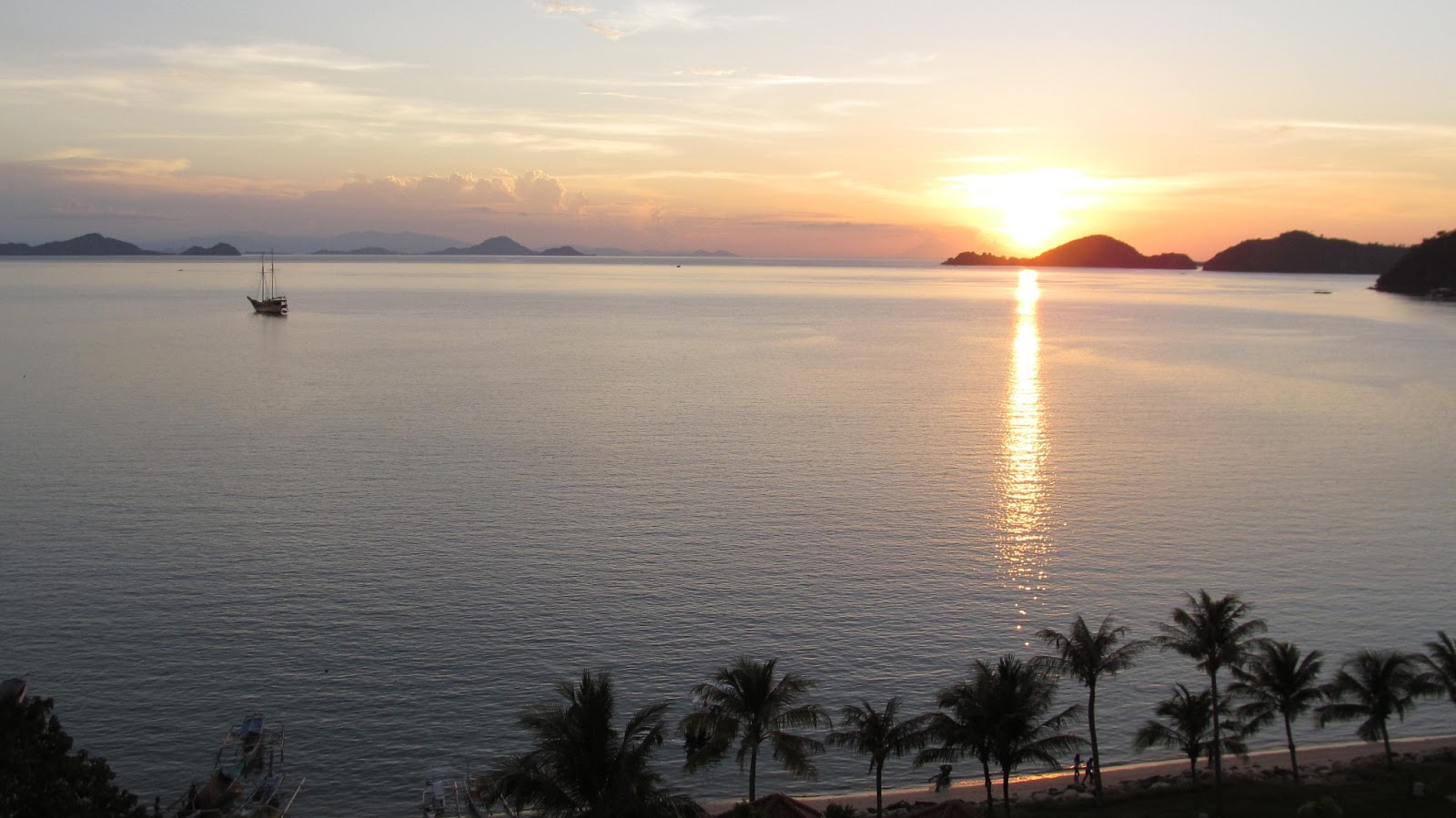
Sunset from hotel room in Labuan Bajo

Lunch with Kir & Pam (in mirror) in Ruteng

Traditional village of Bene, outside of Bajawa

Male figure on top of traditional house

Canada Day in Bajawa: Selamat Ulang Tahun, Canada
"Go be scale for the tree fern, Kir"


Two of the three coloured lakes in Kelimutu National Park


"Go be scale for the volcanic lakes, Kir"
The third lake

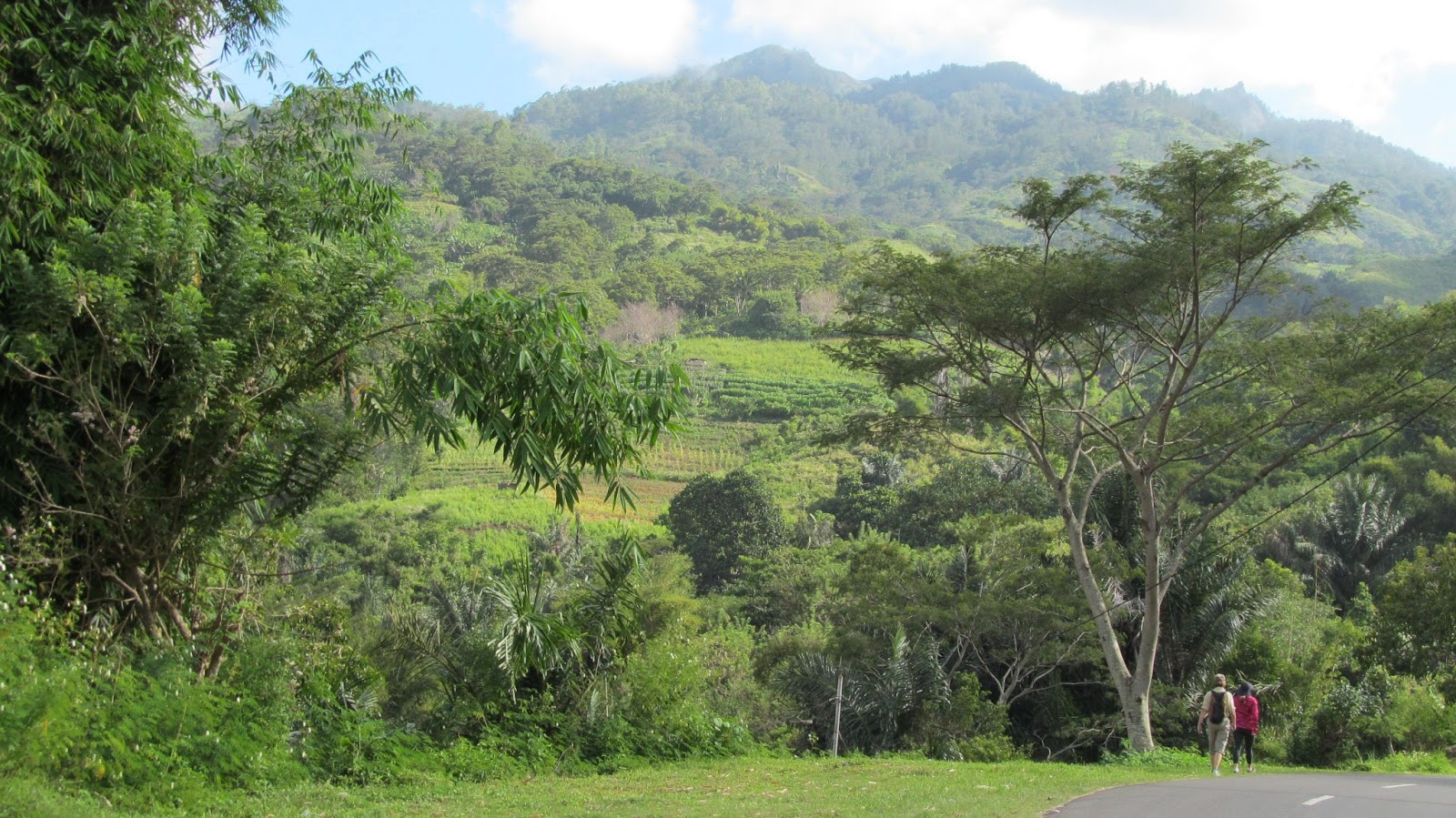
Landscape around Moni, where we stayed to visit Kelimutu


Sunday, 7 July 2013

How I spent my winter vacation: Part 1

Kir, tickled pink, on the porch of our homestay in Sanur.
I’ve had a great last 3 weeks exploring a different island with my daughter Kirsten and another volunteer, Pam, who has finished her placement & will be returning to Canada next month. I flew to Denpasar on June 17th & waited at the airport for Kir to arrive on a later flight from Toronto via Hong Kong. Absolutely super to see her, & excited to show her around the bits of the country with which I’ve become somewhat familiar. We spent several days in Sanur at the beach, browsing the fabric shops on Jalan Sulawesi in the city, & eating good food. Luckily most of the restaurants serve both western & Indonesian food, since I wanted the former & Kir indulged in nasi goreng & mie, with sambal, of course.
Kir's dinner: very fancy nasi goreng
at restaurant in Labuan Bajo.


We also rented a motorbike for half a day & spent a bit of time wandering back roads trying to find a particular beach up the coast. Did find it, but the surfing competition we wanted to catch was over for the day & postponed indefinitely due to wind & wave conditions. Still, fun to wander around independently without having to depend on public transport.


A few monkeys in Ubud.
Then, it was up to Ubud for 3 days to show Kir the monkey forest & the beautiful shops, traditional market & more great restaurants & coffee shops. So far, this is a touristy extravanganza & there are many more of us wandering the streets as it is a prime winter vacation spot for Australians & Europeans. Indonesians are also plentiful since most schools have just started a month-long break right now. Many volunteers want to show visiting family members their placement towns or villages, but I was craving a bit of luxury - so our vacation skipped the whole island of Sulawesi. If Kir decides to visit again in the next year, I’ll bring her up to the tiny village of Bengo & show her the delights (?) of Makassar.

Kir comparing the taste of Lay's
salmon teriyaki chips to a previous
experience with Pringle's
seaweed flavour.


Week 2 of the trip had us on a plane to Labuan Bajo on the island of Flores, a well-known destination for diving, snorkeling & seeing the komodo dragons. We planned on 2 out of these 3, neither of us having current dive certification. Pam was waiting for us at the hotel, newly arrived from saying her goodbyes in Kupang, West Timor, where she had been living for the better part of the last 2 years. The hotel was top-notch at a good price, arranged through one of Pam’s friends. Beach front & pool, lovely sunsets.

View from the 8th floor of our hotel, over the harbour of Labuan Bajo.


Next post: pictures of lazy komodo dragons & volcanic lakes (stay tuned).

Tuesday, 28 May 2013

All I ever needed to know I learned in...


...turns out, Girl Guides. Currently, I’m trying to drag up from my memory games & activities to enhance our youth environmental education program. We’re into the fifth session of eight, and so far it’s been a qualified success. Down to a core group of 8 regulars, all girls & they really like games. So far, learning about the environment is incidental. But this is a good first test run & will help Nasri & I to plan a better program for the next session.
Our first "remaja alam" class.
My goal, however, is to design a logical, science-based program and booklet as a guide and then train the trainers. I’ve proposed a 2-day teacher training session to take place in about 6 months. In other words, I have no intention of going around to every local school week after week taking 6 or 7 kids at a time through an 8-week program for the next 2 years. So, some of my work hours are spent scouring the internet for educational resources, copying & pasting (with references, of course) to compile a teacher’s guide. Then, we’ll work on translating it & then distribute, distribute, distribute to any interested teachers. Thanks to Girl Guides and Atlantic Teacher’s Tour - none of my ideas are original & I always get a little warm glow when I find a use for past experiences which I thought (at the time) might be a waste of time (or at least not in my areas of interest). They’re certainly making me look good here.

Nasri marking the trail through
a pine plantation.
I’ll be getting busier over the next few months, as my language skills pick up & I can contribute more to lectures at the university & meetings in the local villages to facilitate the community forestry program. We’re expecting a class of first year students up in June for their field school - they’ll need a schedule & some supervision on plot establishment & data collection. 

We’ve also started marking trails, just in case stray visitors happen along. The Hutan Pendidikan (Learning Forest) is only 1300 hectares in size, but seems a lot bigger, as the terrain is hilly. In places, the trails are very steep and there are several waterfalls scattered throughout the forest. Unfortunately a lot of the area is planted to pine, which is not native to South Sulawesi; the species actually originates from Sumatra. I say unfortunately because the native forest is much more interesting with mixed broadleaved trees - looks like you would imagine a tropical rainforest should look. The pine was planted in the 1970s by the government; professors from the university have also planted some areas with ebony and mahogany, which are native. In open meadows the natural forest does not regenerate - cows and water buffalo owned by the local community freely range and browse everything but a few stray shrubs that apparently aren’t to their taste. 


Wallowing water buffalo
And another small step this week; a meeting between faculty members and the heads of the local villages to talk about issues concerning both sides. Encroachment into the forest by local residents establishing rice fields and vegetable gardens is a problem that will require some discussion. The previously mentioned free ranging cows can obliterate reforestation efforts. Also, there is a random network of small pipes to conduct water from the hills to individual houses that should be replaced by planned distribution. Benefits to the local communities were emphasized; if we can build up the capacity of the Learning Forest to host visitors and researchers, job opportunities on site (for forest guides, security, cleaning & cooking staff) will increase. So, we seem to be on track, although I’m sure there are some bumps ahead that we can’t see yet.

Thursday, 25 April 2013

The Case for an Indonesian Downhill Ski Team

I’m going to start working on a proposal to develop a national Indonesian downhill ski team, for several great reasons. First of all, balance - they’ve got it, as a result of riding motorbikes - from birth as passengers & then as soon as they’re big enough to reach the controls on their own (the licensing age is 14, but rules aren’t always followed). Many women ride pillion sidesaddle, which demands its own delicate balance & women drivers in (very) high heels are everywhere. Families of four or five will fit with relative comfort onto a bike. And I’ve seen everything from dozens of eggs to 10 foot ladders and full size bookcases loaded onto tiny scooters. Got to get from A to B somehow, right?

An "intersection" - guy with his arm out & a whistle guiding van into the stream of traffic across about 5 and a half lanes of oncoming vehicles.
Second reason - control. Driving on a bike in Indonesian traffic is exactly like negotiating the closest bunny hill to Toronto the day after Christmas on downhill skis. First rule - don’t worry about what’s behind you - you have no control over the guy coming up on your right or the minibus trying to pass you on your left, you need to keep your eyes on the next pothole in front of you & your rearview mirrors really only give you a glimpse of half of your own arm & a somewhat terrifying snapshot of the masses of scooters in the rear. So the strategy to safely & calmly driving around Makassar is just what you’d do on a black diamond slope with occasional moguls - weave around those slower than you, leave room for unexpected co-recreationalists popping out from the trees or side trails, and be ready to stop when the newbie in front crosses his tips - at the same time scanning the surface for holes, bumps and slippery patches. After you’ve got all that down, it’s quite fun. But it does demand a lot of focus, & you need regular breaks to slow your heart down.

And the third reason that I can see gold for downhill skiing in Indonesia’s future - optimism. It may be because I’m still working on the language but I haven’t met a cynical Indonesian (yet). In fact, the country faces many of the same difficulties we do in North America - although currently they have better economic growth, unemployment and underemployment is high, there are very limited opportunities for young people & even those with university degrees earn very low wages. But the Indonesians I know look forward with a (somewhat confusing to me) belief that their lives are getting better. They commonly express ambitious goals & sincerely believe that these are within reach.

To some extent, I think that this cheerful attitude towards life can be explained by the bahasa Indonesia word ‘belum’. Essentially, it means ‘not yet’. If someone asks you ‘have you had lunch?’ the answer wouldn’t be ‘no’, it would be ‘belum’. This could be interpreted as: not yet, I’d love to, the possibility is still out there, what have you got? You get the same answer if you ask someone on this island whether they’ve been to Bali. Belum - but the universe may get me there sooner or later. Most Indonesians can’t afford the plane ticket to travel off their own island, and hotels are completely out of reach. But, whether the question is ‘have you finished your homework’ or ‘are you married’ or ‘have you taken that commercial flight to the moon’, you’d hear ‘belum’. But ‘belum’ says it all. The possibility is always out there. That one word might just reflect a uniquely Indonesian deep-seated optimism. I can learn from that. 

I haven’t started my ski team proposal, belum.

Thursday, 28 March 2013

Getting what you need - Shopping


Open air markets are the shopping centres for fresh local food, clothes, kitchen utensils & many other goods. Every village of any size hosts a market weekly or bi-weekly; our local market runs twice a week from about 7 to 10 am. Indonesian families may be more likely to own a television than a refrigerator, which seemed quite strange to me at first. But after a trip to the market, things are a little clearer. When you can grow food all year around, long-term food storage is less of a priority. Rice is dried of course, so even in areas where only one crop a year can be grown, it’s easily stored. Fruit comes into season at different times of the year, so while you can’t find mangos now (December & January is harvest time for these), rambutan & durian are available. Papayas are still growing & will be ready to eat in a month or two. Market vegetables (tomatoes, potatoes, beans, water spinach & others) are grown pretty much continuously. 

So, why would you need a fridge? The ice cream guy drives by on his motorbike with a cooler mounted on the rear seat at least once a day. The other strange (to me) thing, ‘though is that fresh dairy products are non-existent in smaller towns & villages. Milk is sold in powdered or canned version. I say “strange” because there seems to be no shortage of cows & goats resident in these areas. I assume they are raised for their meat & the milk is taken to be processed. Processed "cheese" food, regular milk & margarine are available in larger towns, but only one (pricey) store in Makassar that caters mostly to expats stocks yoghurt, cheese & butter. Let me tell you: you quickly realize how heavily a North American diet leans on dairy food when you can’t get any.

The local lawn service providing mowing & fertilizing, but not milk.
Aside from Indonesians who make their living farming or fishing, there are probably millions of independent businesses run by individuals & families here. Most common are small shops (toko) & diners (warung) which can be found in even the tiniest settlements. The shops sell a variety of necessities - soap, candy, batteries, coffee, bread, & all sorts of processed goods (cookies, ramen noodles, etc). 

Indonesians talk about food the same way Canadians talk about the weather, even ‘though it’s not terribly interesting & much less variable than spring in New Brunswick. Warungs may specialize in seafood, chicken or meat (with rice or noodles), but even though they’re all independently owned the menus are predictable and seem to be designed by one big central franchiser. 

Other small businesses seem to be ruled by extreme specialization; roadside stalls will have fish or vegetables or fruit & very rarely more than one type of item. This tendency persists in many shops in larger cities selling manufactured goods. A while back a couple of us went looking for motorbike gloves & quickly learned that a store selling helmets does not sell gloves, or anything else you might need for your bike.

Almost everyone uses cell phones (landlines can only be found in offices), and stalls selling pulsa (time for your phone) are common as well. And cheap - approximately $1.20 Cdn for enough time to give you about 3 weeks of texting & talking.

So, let’s get down to prices - what does it cost to live here? My volunteer allowance is roughly $8.00 Cdn per day, which is well more than adequate to buy food, drinking water, phone time, gas, & some extras. Housing is provided under our agreements, & although some volunteers have to buy electricity, I don’t. In fact, my allowance is luxurious compared to my work partner, who earns slightly more than half of what I do. Rent for a modest house may run between $700 to $800 Cdn a year, but even quite a large house won’t be much more than $1200 Cdn annually. Gas, about $0.25 per litre, water, $1.30 for a large dispenser container. Indonesians are amazed when I tell them what I earned at my last Canadian job - but I’m careful to qualify the amount by also telling them our prices, including the cost of heat in winter.

In Denpasar (& Jakarta, I assume, although I haven’t been there yet) you can find pretty much any consumer good you need from computers to yoghurt. Fewer “western” goods can be found in Makassar, but many large malls are springing up there with department stores, bakeries, electronic shops, hardware & of course, Starbucks, McDonalds, Pizza Hut & KFC. Dunkin’ Donuts has gotten in on the ground floor here, & Indonesians (like most everyone else) love donuts - there’s an opportunity here for Tim Horton’s. 

Saturday, 16 March 2013

New job, new house


Didn’t really expect to be wearing socks to bed for warmth while living in Indonesia, but my new home is a bit chilly & it has been raining quite a lot over the last 3 weeks. I invested in a fleece blanket, am glad I packed jeans & several long-sleeved shirts & it’s a nice change not to be continuously sweating while simply sitting on the couch. 

Amir collecting samples
I’m living in the left half of the house (photo on left). Cristine, a graduate student from Italy who is studying macaques; their behaviour, eating preferences, and nutrition; shares the other half with her assistant, Amir, who is multi-talented and indispensable. He climbs 40-metre trees to gather samples, cooks dinners, fixes electrical cords, cleans fish, does motorcycle maintenance etc. etc. Cristine has been here for almost 3 years, so we communicate in bahasa Indonesia - me not having much Italian (that is, none). I’m sure I’m now picking up the accent with my bahasa ‘though, so it’ll be a strange variant that I’m speaking. I went out to the forest with them a couple of weeks ago & saw one large monkey travelling through. There are 3 bands in the local area - 2 resident in UnHas forest and one in Bantimurang National Forest, the boundaries of which abut the Learning Forest. 

The picture to the left is my side yard - a wide rice field surrounded by the limestone hills. The higher elevations have pine forests and lower down the slopes are covered with mixed species dipterocarp forest. The karst geology leaves a landscape with steep-sided hills, frequent landslides in the rainy season & river valleys that vary from narrow to wide plains. I saw an article in the news that karst is also subject to sinkholes - one of these swallowed a man in Florida a couple of weeks ago. That’s not one of my major concerns. It’s a beautiful landscape & a relatively quiet location. The road is about 100 metres downhill, so there’s some traffic noise, constant hum of insects and a weird snuffling noise outside my house last week (I didn’t get up to check - sounded like a wild pig, which is possible). I’ve started seeds for a garden - lettuce, tomatoes, beans, zucchini & herbs - and am looking forward to fresh produce in a few months. The local market is convenient (2 days a week), but I’m pretty sure I can grow equivalent or better veggies right outside my front door.
Tree roots on rock
Local scenery


The job? Well, it has some potential. My work partner Nasri & I have several projects that will make the Learning Forest a more valuable and organized resource for research, education and local outreach that are priorities for the university. We’re developing a short after-school environmental programme, need to start work on a waste management plan for the main site, and delineate boundaries of the agroforestry model area as a first step in establishing that as a learning tool. I’m being very generous with our timeline - in six months we may see a few baby step results.


About once a week or so I should be able to get into the city, Makassar (when the cats aren't using my bike) to work at the university office & eventually teach a couple of subjects. Not to mention, get a caffeine fix at Starbucks & pick up some groceries. Next week is already looking busy - a quick trip to Singapore for visa renewal, then a two-day session given by Mangrove Action Project to learn about rehabilitation of degraded coastline habitat. More on this later.